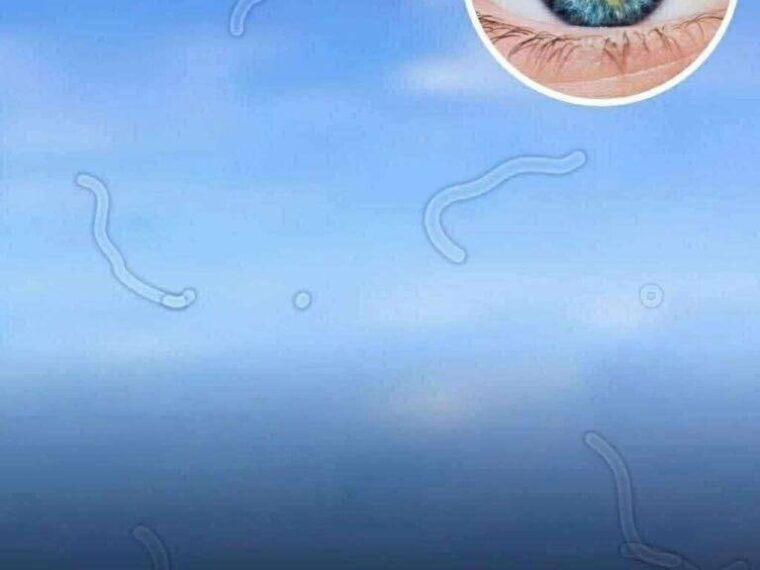
Have you ever noticed tiny specks, cobwebs, threads, or shadowy shapes drifting across your vision—especially when looking at a bright sky or a white wall? These mysterious shapes are called eye floaters, and while they’re often harmless, they can sometimes signal a serious eye condition.
Here’s everything you need to know about floaters, why they happen, when to worry, and what eye doctors recommend you should do.
👀 What Are Eye Floaters?
Eye floaters are small shadows cast on the retina by tiny clumps of gel or cells inside the eye. They may look like:
- Black or gray specks
- Squiggly lines
- Cobwebs
- Transparent strings
- Small rings or dots
Floaters move when your eyes move and often seem to dart away when you try to focus on them.
🧠 Why Do Floaters Appear?
Inside your eye is a clear gel-like substance called the vitreous humor. As we age, this gel begins to shrink and become more liquid. Tiny fibers within it can clump together and cast shadows on the retina.
This process is known as posterior vitreous detachment (PVD) and is very common after age 40.
Common Causes of Floaters:
- Aging (Most Common Cause)
Natural changes in the vitreous gel. - Posterior Vitreous Detachment (PVD)
The vitreous pulls away from the retina. - Eye Injury or Trauma
- Near-sightedness (Myopia)
More common in people with high myopia. - Eye Surgery (like cataract surgery)
- Inflammation inside the eye (Uveitis)
- Retinal Tear or Retinal Detachment (Serious)
⚠️ When Are Floaters Dangerous?
Most floaters are harmless and fade over time. However, you should seek immediate medical attention if you experience:
- A sudden increase in floaters
- Flashes of light in your vision
- A dark curtain or shadow moving across your field of vision
- Blurred or distorted vision
- Loss of side (peripheral) vision
These symptoms may indicate a retinal tear or retinal detachment, which is a medical emergency and can lead to permanent vision loss if untreated.
🩺 What Eye Doctors Recommend
If you start seeing floaters, here’s what eye specialists advise:
1️⃣ Don’t Panic — But Don’t Ignore It
Occasional floaters are common, especially as you age. However, sudden changes require evaluation.
2️⃣ Schedule a Comprehensive Eye Exam
An ophthalmologist will perform a dilated eye exam to check the retina and vitreous for tears or detachment.
3️⃣ Monitor Your Symptoms
Keep track of:
- How many floaters you see
- If they increase suddenly
- If you notice flashes or vision loss
4️⃣ Avoid Self-Treatment
There are no proven home remedies, eye drops, vitamins, or exercises that eliminate floaters.
💊 Can Floaters Be Treated?
TO CONTINUE READING THE ARTICLE PLEASE SEE PAGE 2