If you’ve been scrolling through social media lately, you’ve probably seen this eye-catching trend: a woman spraying paint through a simple kitchen colander and creating stunning, firework-like patterns. It’s creative, oddly satisfying, and perfect for New Year decorations—which is exactly why people can’t stop sharing it.
What makes this idea so powerful isn’t just how beautiful the results look—it’s how incredibly simple and accessible it is. You don’t need fancy tools or artistic skills. Just a few basic items, a little creativity, and you’re ready to create something amazing.
Why This DIY Idea Is Going Viral
This trend taps into something people love: turning everyday objects into something extraordinary. A colander—something you normally use for pasta—suddenly becomes a creative tool that produces intricate, almost magical designs.
The spray paint creates patterns that resemble fireworks, snow bursts, or even galaxy effects. It’s visually satisfying and unique every single time. No two designs are ever identical, which makes each creation feel personal.
Another reason it’s blowing up? It’s budget-friendly. You don’t need expensive supplies. In fact, most of the materials are easy to find online—you can browse affordable spray paint sets here:
https://amzn.to/4m6TmXB
Affiliate Disclaimer:
Some links in this article are affiliate links, meaning I may earn a small commission at no extra cost to you. This helps support the content while recommending useful products.
How the Technique Works
The method itself is surprisingly simple, but the results look professional.
You place a colander slightly above your surface—this could be paper, canvas, wood, or fabric. Then you spray paint through the holes. As the paint passes through, it spreads into tiny droplets, forming a beautiful scattered pattern.
The closer the colander is to the surface, the more defined the pattern will be. If you lift it higher, the effect becomes softer and more diffused.
Want to make it even better? Layer colors. Start with metallic tones like gold or silver, then add bold colors like blue or red for that New Year fireworks effect.
Step-by-Step: How to Spray Paint Through a Colander (Beginner-Friendly Guide)
If you’re wondering how to actually recreate this viral New Year idea, don’t worry—it’s incredibly simple. Follow these steps and you’ll get stunning results even on your first try.
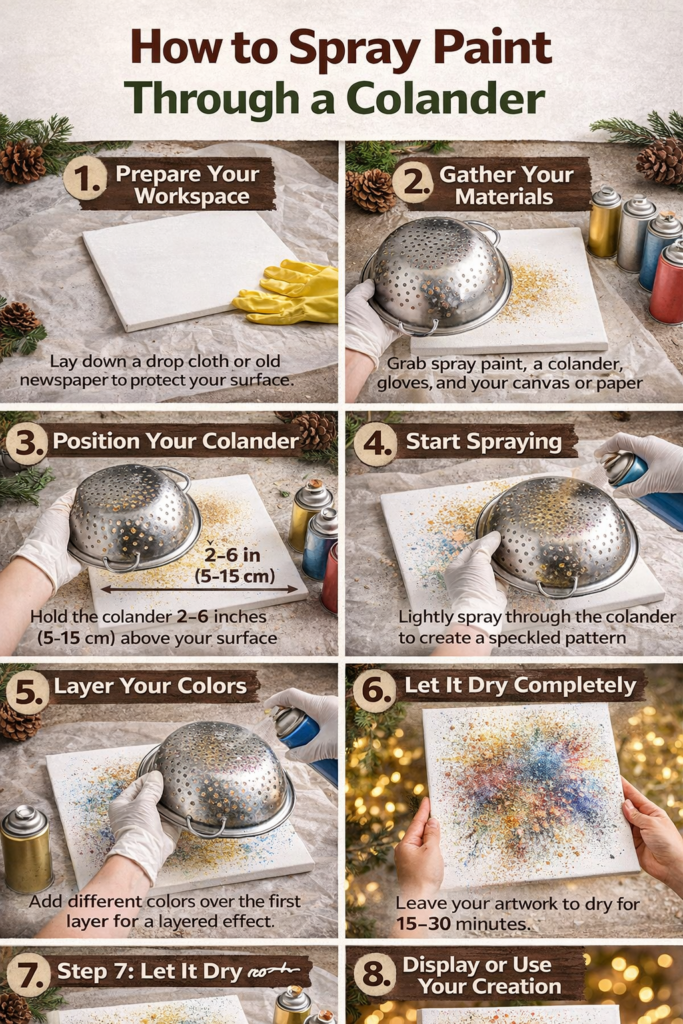
Step 1: Prepare Your Workspace
Start by choosing a well-ventilated area—outdoors is best. Lay down a drop cloth, old newspaper, or cardboard to protect your surface from paint.
You can grab a simple drop cloth here:
https://www.amazon.com/s?k=drop+cloth+painting
This step is important because spray paint can spread further than you expect.
Step 2: Gather Your Materials
You only need a few simple items to get started:
- Spray Paint (Multiple Colors)
You can explore a variety of colors and finishes here:
https://amzn.to/4m6TmXB - Kitchen Colande
Any type works, but if you need one, check affordable options here:
https://amzn.to/3O9Ug93 - Protective Gloves
Keep your hands clean with disposable gloves:
https://amzn.to/4bJCAdr - Drop Cloth or Newspaper
Protect your surface easily with a drop cloth:
https://amzn.to/41EJB9l - Canvas or Paper Surface
Great for wall art projects:
https://amzn.to/4cjV5oQ
Having everything within reach makes the process smooth and more enjoyable.
Step 3: Position Your Colander
Place your canvas or paper flat on the ground. Hold the colander about 5–15 cm (2–6 inches) above the surface.
This distance controls the effect:
- Closer = sharper, more defined dots
- Higher = softer, more spread-out effect
Think of it like controlling fireworks intensity.
Step 4: Start Spraying
Shake your spray paint well, then lightly spray through the colander holes.
Don’t hold the spray too long in one spot—use quick bursts. This prevents paint from pooling and keeps the pattern clean.
If you want smoother control, try a quality spray paint set:
https://amzn.to/3OfIJF8
Step 5: Layer Your Colors
Let the first layer dry for a minute or two, then repeat with a different color.
Try combinations like:
- Gold + Blue (classic New Year look)
- Silver + Red (bold and festive)
- Purple + Pink (creative and modern)
Layering colors adds depth and makes your design pop.
Step 6: Experiment with Movement
TO CONTINUE READING THE ARTICLE PLEASE SEE PAGE 2