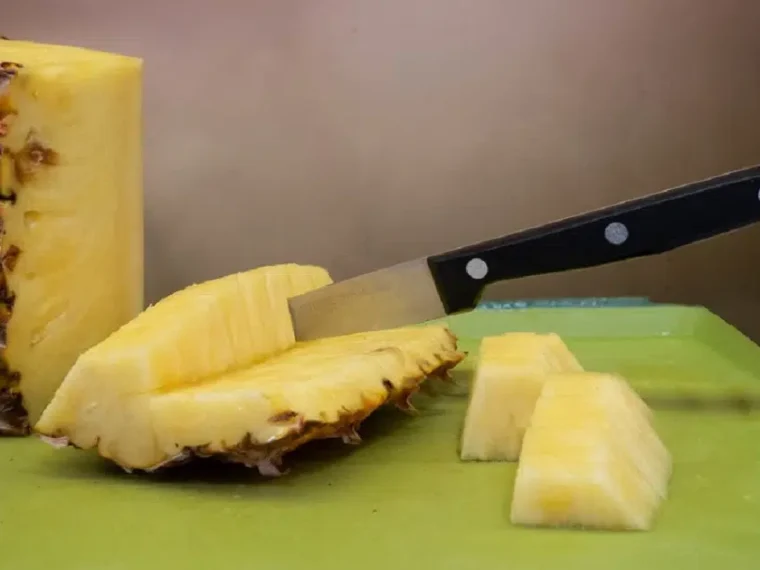
I was eating pineapple with my husband like it was some kind of act of self-care—which, in a way, it is. I mean, it’s fruit, right? It counts. But the thing is… my mouth started doing that thing. That tingly, almost itchy, not-quite-burning thing. You know it if you’ve ever had a few too many chunks in a row and suddenly your tongue feels like it’s buzzing. Not painful, exactly—just weird. Distractingly weird. My husband on the other hand didn’t. He couldn’t figure out what I meant.
My kids? Forget it. One bite and they’re out. “Why does it feel like it’s fighting me?” was my son’s reaction last summer. I laughed then, but lately, I’ve started to think… maybe he’s not wrong.

Anyway, this question’s been in the back of my mind for ages, but I’d never bothered to look it up. Then, the other night—classic me move—I was avoiding emails and spiraling through TikTok when this video stopped me mid-scroll. It was from @sf_microscopy, and it had this slow-mo close-up of pineapple under a microscope. I thought, “Alright, let’s see what this is about,” expecting… honestly, I don’t know what I was expecting. But not what I got.
Turns out, the tingling is real. Like physically real. Pineapples contain these little crystal things called raphides. They’re made of calcium oxalate, and they’re shaped like, well, microscopic needles. Literal. Needles. Inside the fruit.
And those sharp little guys? They jab into your cheeks, tongue, the roof of your mouth. It’s not just a quirk—it’s a defense mechanism. The plant’s way of saying “not so fast” to anything that might munch on it. Humans included, apparently.
But wait—because it gets weirder.
Pineapple also has bromelain. I’d heard of it before—vaguely knew it had something to do with breaking down meat. It’s used in marinades, right? Well, bromelain also starts breaking down proteins in your mouth the moment you eat it. Combine that with the raphides? You’ve got yourself a fruit that stabs you and tries to digest you. Mid-snack.
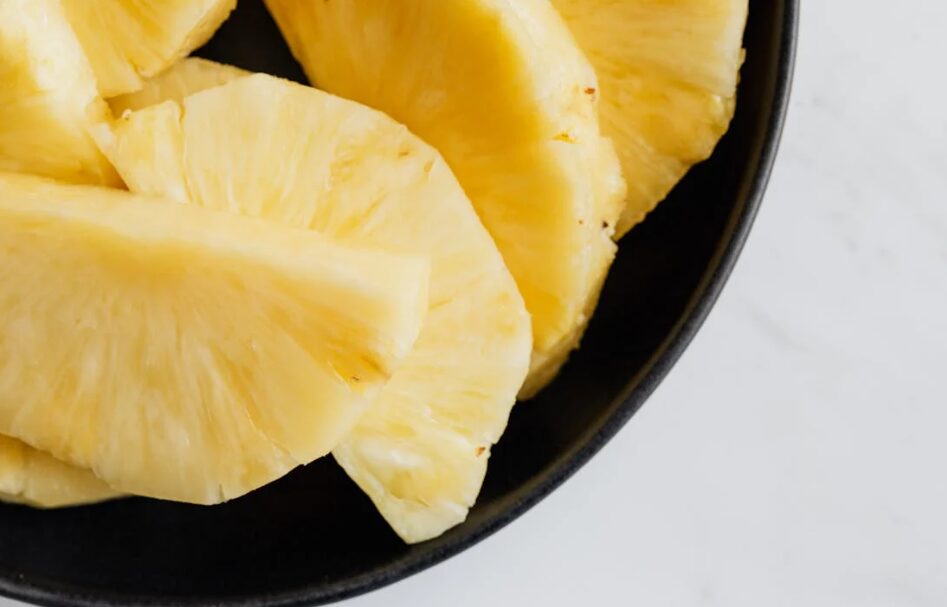
The comment section on that TikTok was gold. People were shook. Some said they’d never eat pineapple again, others were like, “Knew it wasn’t just me,” and then there were those who claimed the burn is part of the fun. (Hi. It’s me. I’m them.)
I made the mistake of telling my kids about all of this—thought they’d find it cool. Wrong. Now they’ve sworn off pineapple unless it’s been cooked into something totally unrecognizable. If it’s not caramelized or buried under melted cheese, it’s not going in their mouths.
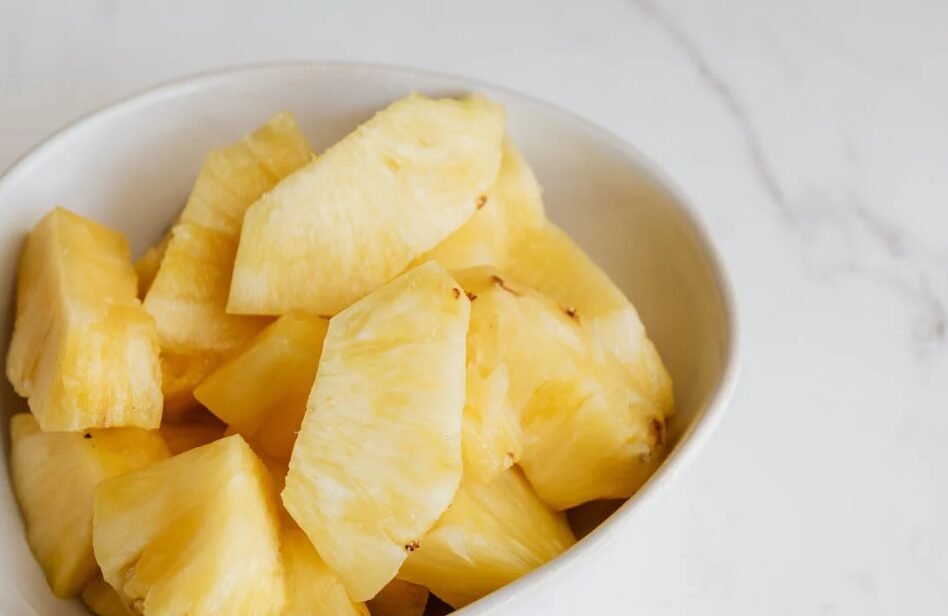
And honestly? I kinda get it. But also… I don’t. Because now that I know this? I sort of respect it more. Like, here’s a fruit that’s not just sweet and juicy—it’s also armed to the teeth on a molecular level. Can’t run, can’t hide, but still managed to evolve a self-defense system so intense it freaks out toddlers and TikTokers alike.
And here’s something else—sometimes that tingly thing is super mild. Barely there. Other times, it feels like your mouth’s under siege. Which makes me think: is it the ripeness? The variety? Maybe some pineapples are just more vengeful than others.
So, yeah. Now when I eat pineapple, I do it with this strange sense of awareness. Like I’m part of a truce. I won’t eat too much, and it won’t melt my gums off. Seems fair.
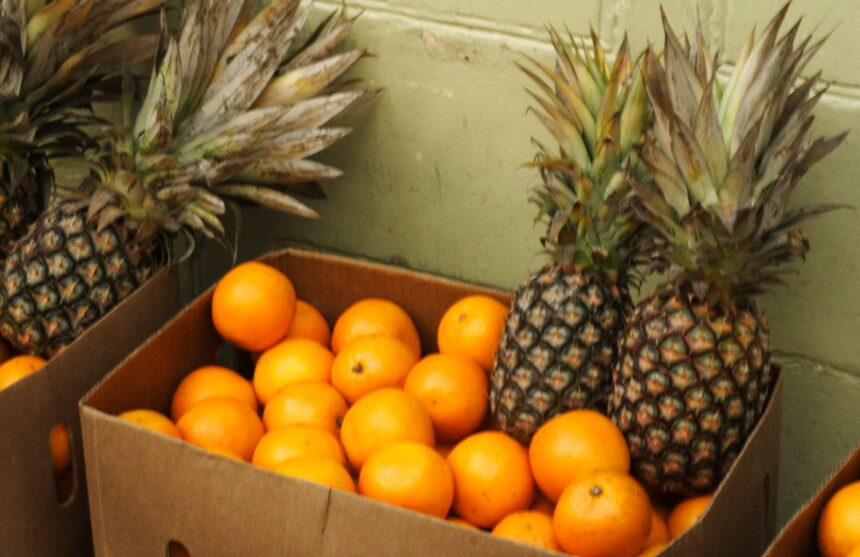
Will my kids ever come around? Doubt it. They’ve got long memories when it comes to food trauma. But me? I’ll keep eating it—sharp little crystals and all. Because sometimes the best things come with a little sting.
And because fruit that can fight back? Honestly, kind of iconic.