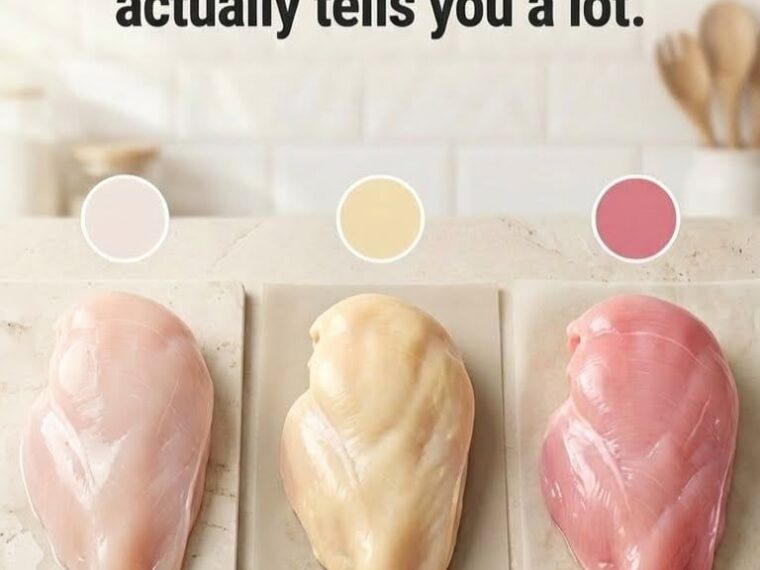
Walk into any butcher shop or supermarket, and you’ll notice something interesting: not all chicken meat looks the same. Some pieces are pale pink, others are yellowish, and some are deep pink or even slightly red.
Many people assume color is just cosmetic—but in reality, the color of chicken tells an important story about freshness, handling, diet, and overall quality.
Let’s break it down properly 👇
Why Chicken Color Matters at All
Chicken meat color is influenced by several key factors:
- Freshness
- Storage conditions
- Diet of the chicken
- Processing method
- Oxygen exposure
- Age and muscle type
Color alone doesn’t automatically mean “good” or “bad,” but when you understand what each shade means, you can make smarter, safer food choices.
1️⃣ Pale or Very Light Pink Chicken — What It Means
Appearance:
- Light pink or slightly grayish
- Almost translucent in some areas
What causes it:
- Chicken raised on a grain-based diet
- High water content in the meat
- Sometimes linked to intensive farming
- Can also appear after freezing and thawing
Quality insight:
- Usually safe if fresh and properly stored
- Texture may be softer
- Flavor can be milder and less rich
⚠️ Be careful if the meat looks:
- Slimy
- Has a sour or sulfur smell
That indicates spoilage, regardless of color.
2️⃣ Yellowish Chicken — Natural but Often Misunderstood
Appearance:
- Creamy yellow to golden tone, especially in fat and skin
What causes it:
- Diet rich in corn or maize
- Higher natural fat content
- Traditional or free-range feeding methods
Quality insight:
- Often more flavorful
- Juicier when cooked
- Very common in rural or traditionally raised chickens
✅ This color is not a bad sign
❌ It does NOT mean the chicken is old or spoiled
In many cultures, yellow chicken is actually preferred for its taste.
3️⃣ Deep Pink or Reddish Chicken — A Sign to Examine Closely
Appearance:
- Strong pink or red tone
- Especially noticeable in breasts or thighs
Possible causes:
- Younger, more active chickens (more myoglobin)
- Better blood circulation in muscles
- Fresh exposure to oxygen (recently cut meat)
When it’s normal:
- Freshly butchered chicken
- Free-range or active birds
When it’s NOT okay:
- Uneven red patches
- Dark blood spots
- Greenish or brown edges
🚫 These signs may indicate:
- Poor bleeding during slaughter
- Bacterial growth
- Improper storage
4️⃣ Color Changes That Mean “Do NOT Eat”
No matter the shade, never ignore these warning signs:
❌ Gray, green, or blue tones
❌ Sticky or slimy surface
❌ Strong rotten or ammonia smell
❌ Rainbow sheen combined with bad odor
If you see these—throw it away immediately.
Freshness Test: Color + Smell + Texture
Color alone is not enough. Always check:
- Smell: Fresh chicken smells neutral or slightly meaty
- Texture: Firm, not sticky
- Color: Even and natural, not patchy
When all three match → 👍 Safe choice
Does Cooking Change the Meaning of Color?
TO CONTINUE READING THE ARTICLE PLEASE SEE PAGE 2