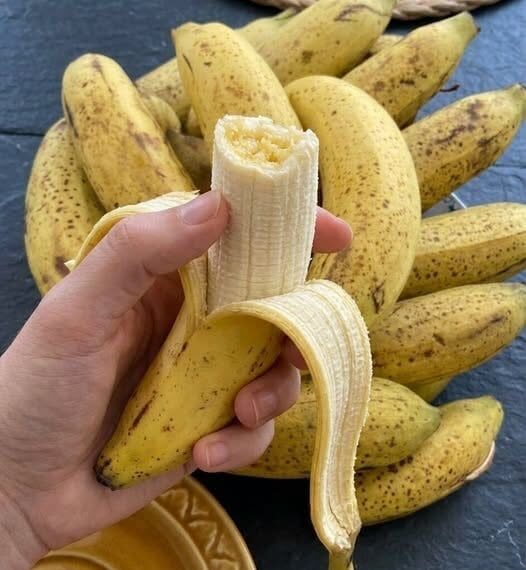
Bananas are one of the simplest fruits you can keep in your kitchen. They’re naturally sweet, filling, affordable, and packed with important nutrients.
But what happens when you eat one at night, especially before going to bed?
You may have heard claims that bananas can help you sleep, cause weight gain if eaten late, improve digestion, or even trigger blood-sugar problems. The truth is a little more interesting: the effects depend on your overall diet, portion size, health, and individual response—not simply the time on the clock.
Here’s what you should know. 🍌👇
🌙 1. A Banana May Make a Good Evening Snack
If you’re hungry at night, a banana can be a better choice than many highly processed snacks.
One medium banana provides carbohydrates, fiber, potassium, vitamin B6, and several other nutrients. It also contains natural sugars that provide energy without being an ultra-processed dessert.
Instead of reaching for:
❌ Cookies
❌ Candy
❌ Sugary cereal
❌ Chips
❌ Ice cream
you could choose:
✅ A banana
✅ Banana with a small amount of peanut butter
✅ Banana with plain yogurt
✅ Banana with a few nuts
The key is portion size and what you pair it with.
😴 2. Can Bananas Help You Sleep?
This is one of the most popular claims about eating bananas at night.
Bananas contain magnesium and potassium, minerals involved in normal muscle and nerve function. They also contain vitamin B6, which plays a role in the body’s production of neurotransmitters.
Bananas also contain small amounts of compounds involved in pathways related to serotonin and melatonin production.
However, it’s important not to exaggerate this.
🍌 A banana isn’t a sleeping pill.
There isn’t strong evidence showing that simply eating a banana before bed will reliably cure insomnia or dramatically improve sleep quality.
If you’re hungry before bedtime, though, a banana can be a convenient and nutritious snack—and avoiding hunger may make it easier for some people to settle down for the night.
🧠 3. Vitamin B6 Is One of the Banana’s Standout Nutrients
Bananas are a useful source of vitamin B6.
Vitamin B6 is involved in many processes in the body, including:
- Normal nervous-system function
- Protein metabolism
- Red blood cell formation
- Neurotransmitter production
- Normal immune function
So while eating a banana at night doesn’t provide a special “nighttime” benefit, you’re still getting valuable nutrients whenever you eat it.
💪 4. Potassium Supports Normal Muscle Function
Bananas are famous for their potassium content.
Potassium is an essential mineral that helps with:
❤️ Normal heart function
💪 Normal muscle contraction
🧠 Nerve signaling
💧 Fluid and electrolyte balance
This is one reason bananas are popular among physically active people.
But here’s an important point:
Eating a banana at night doesn’t make potassium work differently.
Your body uses nutrients throughout the day and night according to its physiological needs.
🩸 5. What About Blood Sugar?
This is where individual circumstances matter.
Bananas contain carbohydrates and natural sugars, so they can raise blood glucose after eating.
But a banana is also a whole fruit containing fiber, water, vitamins, and minerals.
For most healthy people, eating a normal portion of whole fruit isn’t something that needs to be feared simply because it’s nighttime.
However, people with diabetes or impaired blood-glucose control may need to pay closer attention to:
- Portion size
- Overall carbohydrate intake
- What the banana is eaten with
- Medication timing
- Individual glucose response
For example, pairing a banana with a source of protein or healthy fat—such as plain Greek yogurt or a small amount of nuts—may make the snack more filling and can affect the overall glucose response compared with eating carbohydrate alone.
If you have diabetes, your personal meal plan should take priority over generic advice about eating fruit at night.
⚖️ 6. Will Eating a Banana at Night Make You Gain Weight?
This is one of the biggest myths surrounding nighttime eating.
🍌 Eating a banana at night does NOT automatically cause weight gain.
Weight gain is primarily related to your overall energy balance over time, not simply whether a particular food was eaten after a certain hour.
If you regularly consume more calories than your body uses, you may gain weight.
If your calorie intake is appropriate for your needs, eating a banana at 9 PM doesn’t suddenly turn it into a fat-producing food.
In fact, replacing a high-calorie dessert with a banana could potentially reduce your total calorie intake.
The bigger question isn’t:
“What time did I eat the banana?”
It’s:
“How does it fit into my overall diet?”
Save this article 🍌❤️ and share it with someone who always avoids bananas at night!
TO CONTINUE READING THE ARTICLE PLEASE SEE PAGE 2