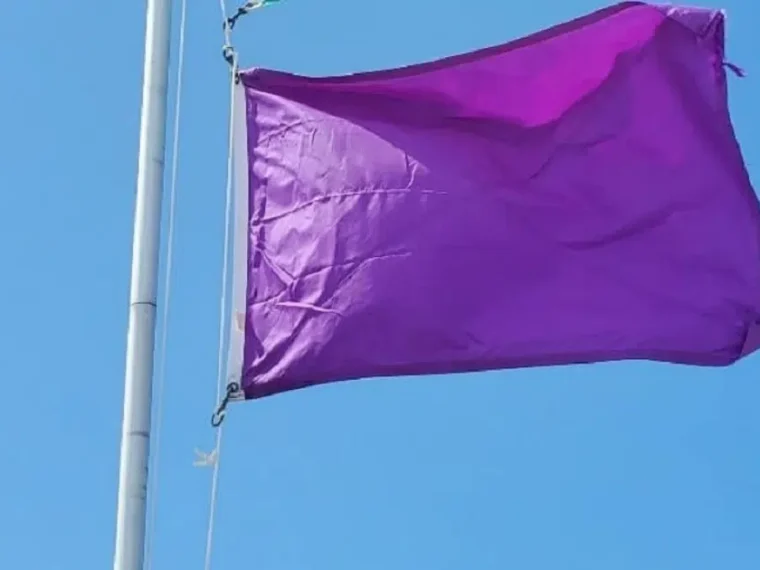
A day at the beach can look perfectly beautiful: blue skies, warm sunshine, gentle waves, and clear water. But sometimes, a small colored flag near the lifeguard station is warning you about something that may not be obvious from the shore.
One of the most important flags to recognize is the purple beach flag.
So, what does a purple flag at the beach mean?
In many beach-warning systems, a purple flag means potentially dangerous marine life has been spotted in the water. This can include jellyfish, stingrays, Portuguese man-of-war, sea snakes, or other marine animals capable of causing injuries. The exact meaning can vary by country or beach authority, so visitors should always check the local flag system and listen to lifeguards.
A purple flag does not automatically mean that the beach is closed. Instead, it is a warning to be especially alert and cautious when entering or remaining in the water.
🟣 What Does a Purple Beach Flag Mean?
The purple flag is generally used to alert beachgoers that marine life that could potentially injure swimmers is present in the water.
The United States Lifesaving Association, following international beach-warning guidance, describes the purple flag as indicating marine pests such as jellyfish, stingrays, or other marine life that can cause minor injuries.
Depending on the location, the warning may relate to:
- Jellyfish
- Portuguese man-of-war
- Stingrays
- Sea snakes
- Certain dangerous fish
- Other potentially harmful marine animals
For example, official beach guidance in Corpus Christi specifically lists jellyfish, Portuguese man-of-war, stingrays, and other hazardous marine life as reasons for displaying a purple flag.
The important message is simple:
🟣 Purple flag = Be alert for potentially dangerous marine life.
🪼 Why Are Purple Flags Used?
Marine animals are part of the natural beach environment, and their presence doesn’t necessarily mean something is wrong with the water.
Jellyfish, for example, can be carried toward shore by currents, tides, wind, and changing water conditions. A beach may therefore display a purple flag when lifeguards or authorities observe an unusually high number of jellyfish or another potentially hazardous species.
A purple flag gives swimmers information that they might not otherwise have.
From the beach, it may be impossible to see what is beneath the surface. A warning flag allows lifeguards to communicate a potential danger quickly to thousands of visitors.
The U.S. National Park Service emphasizes that beach flags are an important safety system and that conditions can change throughout the day because of tides, currents, weather, and wave activity.
🪼 Does a Purple Flag Mean There Are Jellyfish?
Often, yes — but not always.
Jellyfish are one of the most common reasons people associate purple flags with beach warnings.
Some coastal authorities specifically use purple flags when jellyfish or other potentially dangerous marine animals have been observed.
However, the flag does not necessarily identify a specific species.
That’s why it is better to interpret the purple flag as:
“Potentially hazardous marine life is present.”
rather than simply:
“There are jellyfish.”
If you’re unsure what caused the warning, ask the lifeguard.
🦈 Does a Purple Flag Mean There Are Sharks?
This is one of the biggest misunderstandings about purple beach flags.
Under the U.S. Lifesaving Association/international-style definition, purple is not specifically intended to indicate sharks. The International Life Saving Federation’s guidance states that the purple flag is for marine pests such as jellyfish, stingrays, sea snakes, or other marine life that may cause injury, and specifically distinguishes this from shark-related emergency warnings.
However, beach-warning systems are not identical everywhere.
For example, the Royal Sea Safety Authority’s beach safety guide describes a purple flag as indicating potentially dangerous marine life and includes sharks among possible examples.
This is why you should never assume that a purple flag has exactly the same meaning at every beach.
Always check the local warning system or ask a lifeguard.
🚩 Can a Purple Flag Appear With Other Flags?
Yes.
A purple flag can be displayed alongside another beach warning flag.
This is important because the flags may communicate different hazards at the same time.
For example:
🟢 Green + Purple
The water may have relatively calm conditions, but potentially hazardous marine life has been reported.
🟡 Yellow + Purple
There may be moderate surf or currents and potentially dangerous marine life.
🔴 Red + Purple
There may be dangerous surf or currents in addition to marine-life concerns.
The purple flag therefore doesn’t necessarily replace the normal water-condition warning. It can provide an additional warning.
Some beach authorities explicitly state that purple flags may fly alone or together with other colored flags.
🏊 Is It Safe to Swim Under a Purple Flag?
There is no universal yes-or-no answer.
A purple flag generally means that extra caution is required, not necessarily that swimming is prohibited.
For example, some official beach systems state that if a purple flag is displayed but the water is not otherwise closed, swimmers should use extreme caution and watch carefully for dangerous animals.
However, if a purple flag is displayed together with a red or double-red warning, the other flag may impose a much more serious restriction.
The safest approach is:
Look at all the flags, read posted signs, and follow the lifeguard’s instructions.
Never assume that a purple flag by itself means either “safe” or “closed.”
🪼 What Should You Do If You See a Purple Flag?
If you’re already at the beach and notice a purple flag, take a moment before entering the water.
1. Check the beach information board
Many beaches display a chart explaining their warning flags.
This is particularly important when visiting a new country or coastline because flag meanings can differ.
2. Ask a lifeguard
Lifeguards can often tell you what prompted the warning and whether swimming is currently permitted.
3. Look at the water carefully
Don’t assume that you will be able to see dangerous marine life.
Jellyfish can be difficult to spot, particularly in waves, murky water, or bright sunlight.
4. Keep children close
Children may not understand the danger or recognize marine animals.
Adults should closely supervise children whenever they are near the water.
5. Avoid touching marine animals
Never assume that a stranded or apparently dead marine animal is harmless.
Some marine animals can still cause injuries even after they have washed ashore.
6. Follow lifeguard instructions immediately
If lifeguards tell swimmers to leave the water, don’t wait to see what happens.
Beach conditions can change quickly.
🪼 What Happens If You Are Stung by a Jellyfish?
Jellyfish stings can range from relatively mild irritation to serious reactions, depending on the species and the person affected.
Possible symptoms may include:
- Burning or stinging pain
- Redness
- Skin irritation
- Itching
- Swelling
- Raised marks or welts
More serious reactions can involve symptoms such as difficulty breathing, severe pain, weakness, or other signs of a medical emergency.
If someone develops severe symptoms, seek emergency medical assistance immediately.
For a suspected jellyfish sting, ask the lifeguard or local emergency/medical personnel for guidance, because first-aid recommendations can vary according to the species found in that region.
🦀 What About Stingrays?
Stingrays are another type of marine life that may be associated with a purple flag.
Stingrays generally aren’t looking to attack swimmers. Injuries can occur when a person accidentally steps on or disturbs one.
This is particularly relevant in shallow coastal water where stingrays may rest partially buried in sand.
If local lifeguards advise a particular technique for entering shallow water, follow their instructions.
The goal is to avoid surprising or stepping directly on marine animals.
🌊 A Purple Flag Doesn’t Mean the Ocean Is “Dirty”
Another common misconception is that a purple flag means the water is polluted.
Usually, it does not.
In many internationally influenced beach-warning systems, purple specifically refers to marine life, rather than general water pollution.
However, some regions use their own flag systems. France’s official public-service guidance, for example, notes that a purple flag can indicate pollution, dangerous aquatic life such as jellyfish, or certain protected marine and underwater areas.
This illustrates an important point:
Beach flags are not completely universal.
The same color can have different meanings depending on the local authority.
When in doubt, check the beach’s official signage.
🚩 Purple vs. Red Flag: What’s the Difference?
These two flags can be confused because both can indicate danger.
But they generally warn about different types of hazards.
| Flag | Common meaning |
|---|---|
| 🟢 Green | Low hazard / relatively calm conditions in systems that use green |
| 🟡 Yellow | Moderate hazard, such as moderate surf or currents |
| 🔴 Red | High hazard, such as strong surf or currents |
| 🔴🔴 Double red | Water closed to public use |
| 🟣 Purple | Potentially hazardous marine life |
| 🔴🟡 Red over yellow | Lifeguard-supervised swimming area in systems using this designation |
These definitions follow commonly used U.S./international-style beach warning systems, although local systems may differ.
The most important distinction is:
Red generally tells you about dangerous water conditions. Purple tells you about potentially dangerous marine life.
🌊 Why You Shouldn’t Ignore a Purple Flag
The ocean can be deceptive.
A beach can look peaceful while hidden hazards exist beneath the surface.
Rip currents, for example, can occur even on sunny days when the beach looks calm. The National Weather Service advises beachgoers to check forecasts and warning flags and to ask lifeguards about conditions.
Marine life is another hazard that isn’t always visible from shore.
That’s why beach-warning flags are so useful.
They’re designed to provide a quick visual message:
“Pay attention before you enter the water.”
👨👩👧👦 Purple Flags and Children
Families should take purple flags especially seriously.
Children are naturally curious and may want to pick up shells, touch animals, or swim farther from shore.
If a purple flag is flying:
- Keep children within close reach.
- Don’t allow them to chase or touch marine animals.
- Explain that the flag is a warning.
- Stay close to lifeguarded areas.
- Follow all local instructions.
- Consider keeping young children out of the water if marine life is abundant.
Even if swimming remains officially permitted, parents can choose a more conservative approach.
🏖️ What If You Don’t See Any Beach Flag?
Don’t assume that no flag means the water is completely safe.
The U.S. National Weather Service and several beach authorities explicitly warn that the absence of flags does not guarantee safe water.
Conditions can change rapidly.
There may also be beaches where warning flags aren’t being actively displayed.
Before swimming:
- Check the local beach forecast.
- Look for warning signs.
- Identify the nearest lifeguard station.
- Ask about current conditions.
- Never swim alone.
- Keep an eye on children.
🌍 Why Beach Flag Systems Can Differ Around the World
One reason beach flags sometimes cause confusion is that there isn’t one identical system used by every beach on Earth.
The International Life Saving Federation developed guidelines intended to promote consistency, and organizations such as the United States Lifesaving Association use these standards.
But individual countries, cities, resorts, and beaches can adopt additional meanings or variations.
For example, official guidance in Gibraltar has used a purple flag specifically for jellyfish and/or other dangerous marine life, while noting that swimming isn’t necessarily prohibited under that flag alone.
Meanwhile, other authorities may incorporate environmental or protected-area warnings into their own purple-flag system.
So the local sign always wins.
🟣 The Simple Rule to Remember
If you want to remember only one thing about the purple beach flag, remember this:
🟣 PURPLE FLAG = POTENTIALLY DANGEROUS MARINE LIFE
It may mean jellyfish, stingrays, Portuguese man-of-war, sea snakes, or other marine animals capable of causing injury.
It doesn’t automatically mean the water is closed.
It doesn’t universally mean sharks.
And it doesn’t necessarily mean the water is polluted.
The exact interpretation depends on the local beach-warning system.
🏖️ Final Thoughts
A purple flag may not look as alarming as a red or double-red flag, but it is still an important safety warning.
When you see one, don’t ignore it.
Take a moment to find out why the flag has been raised, check the other flags flying nearby, read the local beach information, and listen to the lifeguards.
Remember that the ocean is a natural environment. Marine animals aren’t necessarily “invading” the beach—they are part of the ecosystem. The purple flag simply gives people an opportunity to recognize the increased risk and make a safer decision.
So next time you’re enjoying a sunny day by the sea and notice a purple flag waving above the sand, you’ll know what it is telling you:
🟣 “Watch out for potentially dangerous marine life—and stay alert in the water.”
When it comes to beach safety, a few seconds spent checking the flags could make a big difference.